
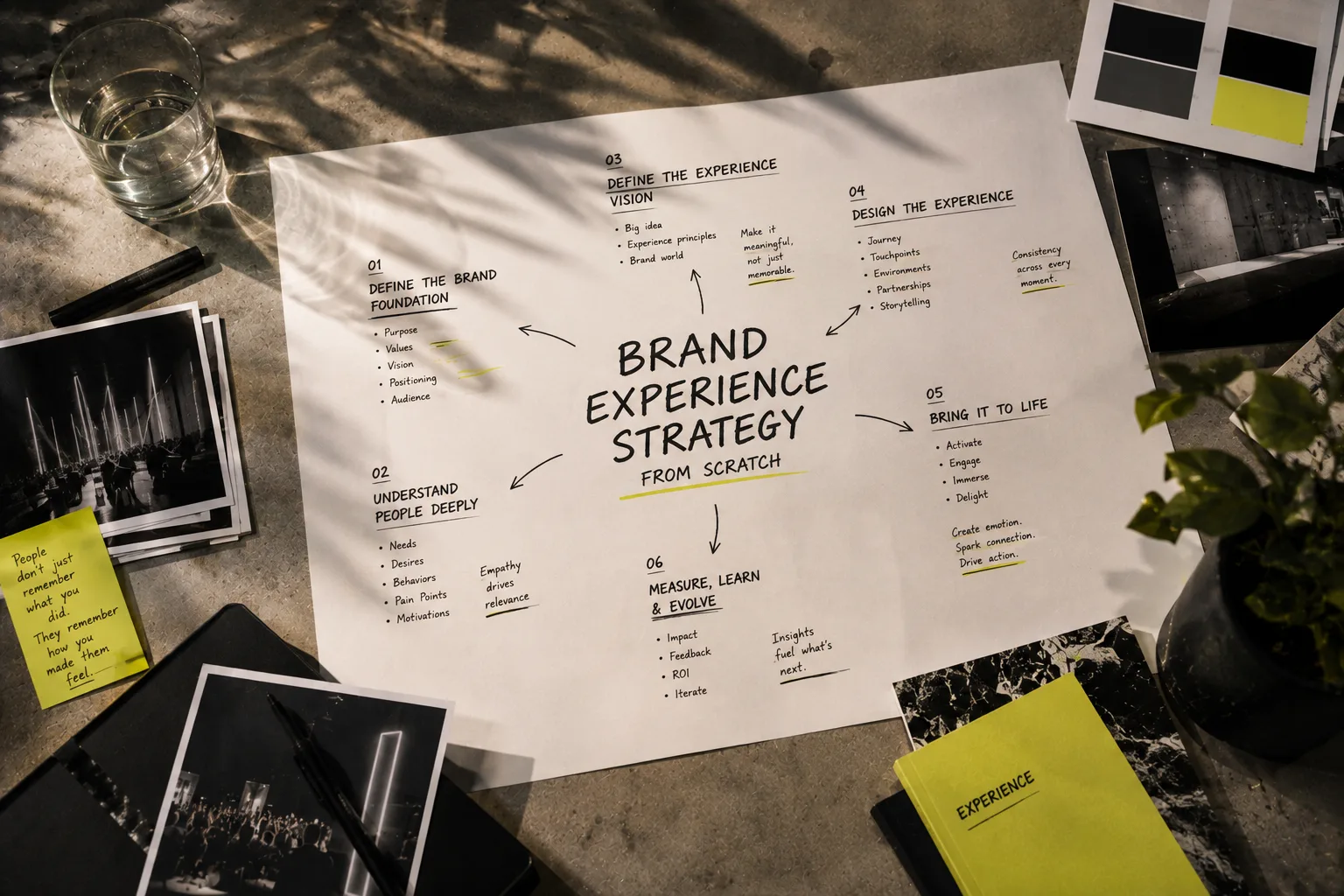
Building a brand experience strategy from scratch can feel overwhelming, especially with tight timelines and ambitious targets. But the foundation is straightforward: clarity, intention, and practical planning. Whether you are launching in a multi-level space like UNLOCKED Wynwood or shaping a pop-up in the heart of Shoreditch, the principles remain the same.
Brands and agencies that take a measured approach to strategy consistently see stronger engagement and better event outcomes. Below, we break down the essential steps for building a brand experience strategy that stands up in any market.
Start With Objectives, Not Tactics
Resist the temptation to jump straight into creative ideas. Before you storyboard or pick your venue, define what success looks like for your brand. Objectives could include:
- Driving product awareness and trial
- Building community among target audiences
- Generating content for brand channels
- Collecting data or feedback
Clear objectives make every decision, from venue choice to programming, more purposeful. They also provide benchmarks for measuring ROI after the event.
Know Your Audience
Go beyond demographics. Consider your audience’s habits, values, and expectations around experiences. Are they looking for exclusivity, shareable moments, or hands-on interaction? Insights from past events, social listening, or even venue partners can help refine your approach.
For example, a younger creative audience might respond best to an immersive, visually driven activation at a venue like UNLOCKED Shoreditch, surrounded by London’s street art and cultural buzz. Corporate stakeholders may expect seamless production and private zones, better suited to a multi-level site with flexible configurations like UNLOCKED Wynwood.
Map Out the Experience Journey
Create a step-by-step journey for your attendees. This exercise isn’t just for the creative team, it anchors your event in reality. Include:
- First impressions (arrival, registration, welcome moments)
- Core experiences (installations, talks, tastings, workshops)
- Social capture opportunities (content moments, influencer zones)
- Post-event touchpoints (follow-up content, feedback surveys)
Consider the physical flow. Blank-canvas venues allow you to build this journey from the ground up, zoning spaces for maximum impact and smooth crowd management.
Choose the Right Partners
No brand experience succeeds in isolation. Agency collaborators, production teams, caterers, and venue staff all shape the outcome. When selecting partners, look for:
- Relevant experience in your market or audience
- Ability to problem-solve and adapt to your vision
- Transparent communication and timelines
Venue teams can often recommend proven suppliers or suggest creative adaptations that optimise the experience for your chosen space.
Think Spatially: Let the Venue Shape the Strategy
The venue shouldn’t be an afterthought. It is the canvas for your brand story. When scoping spaces, prioritise venues that offer:
- Flexible layouts for custom builds
- Good flow between experiential zones
- Strong technical infrastructure (lighting, AV, Wi-Fi)
- Options for branding and content capture
UNLOCKED Wynwood’s scale and multi-level design, for example, opens creative opportunities for immersive installations or tiered programming that smaller spaces simply cannot accommodate.
Plan for Measurement From Day One
Measurement is not just a wrap-up task. Set up data capture touchpoints before the event kicks off. These could include:
- Registration and check-in analytics
- On-site engagement tracking (scannable badges, dwell times)
- Social media monitoring (branded hashtags, geotags)
- Post-event feedback forms
The more intentional your measurement plan, the easier it is to demonstrate ROI and refine your approach for future activations.
Finalise the Timeline and Contingencies
Strategy is only as good as its execution. Develop a detailed timeline with clear milestones for creative signoff, production deadlines, partner coordination, and rehearsals. Build in contingency for late changes, weather, or technical hitches.
Venues with on-site teams and robust infrastructure, like UNLOCKED’s flagship locations, can help smooth last-minute pivots and support both planned and reactive needs.