
The brand experiences that get remembered are almost never the ones with the biggest budget, they are the ones with the clearest story. Storytelling in brand experiences is a structural decision that determines how guests move through a space, what they feel at each stage and what they take away when the event is over.
For brands planning activations, product launches and experiential campaigns in London and Miami, understanding how to use storytelling as a design tool is one of the most effective ways to make a live event land harder and travel further.
What Brand Experience Storytelling Actually Means
Storytelling in a brand experience means giving the event a narrative arc. A beginning, a middle and an end that guests move through in sequence, each stage building on the last. It means every element of the environment, the lighting, the layout, the programming, the product moments, serves the same story rather than existing independently.
This is different from branding. Putting a logo on every surface is not storytelling. A strong brand experience story is felt rather than read. Guests do not need to be told what the brand stands for. The environment communicates it through what they see, hear, touch and experience as they move through the space.
Start With a Single Clear Idea
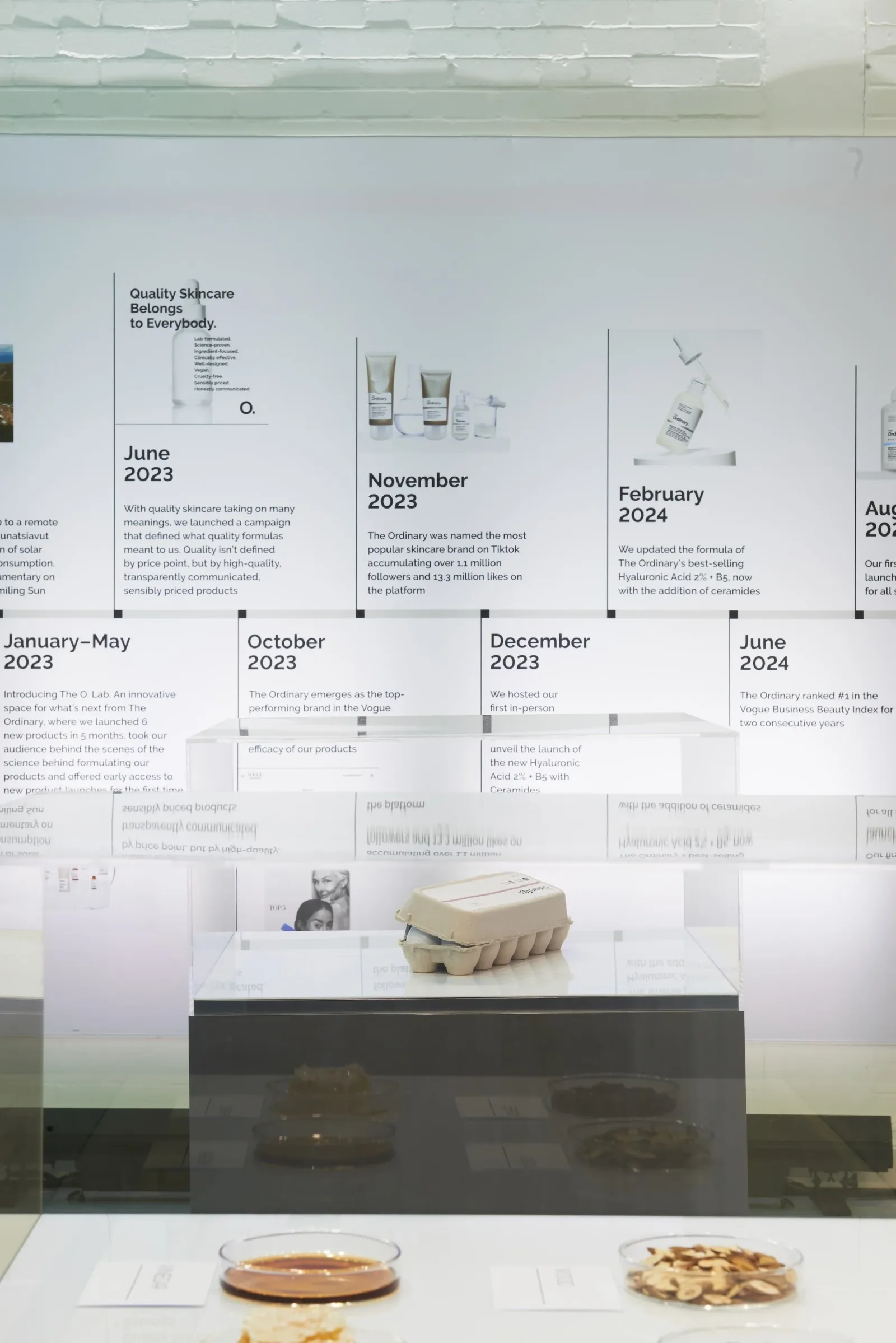
The Ordinary's activation at UNLOCKED Shoreditch was built around the idea of science made accessible, and every floor of the venue expressed a different dimension of that idea, from clinical precision to community and discovery. The story was coherent because the idea was clear before a single design decision was made.
Identifying that single idea before the planning process begins is the most important storytelling decision a brand can make. Everything else, venue selection, layout, programming, content, guest journey, follows from it.
Use the Venue to Set the Scene
The venue is the first chapter of a brand experience story. Before a guest sees a product, reads a piece of copy or speaks to a member of the event team, they have already formed an impression based on the space they walked into. That impression either supports the story or works against it.
Industrial venues in Shoreditch and the Wynwood Arts District in Miami work so consistently well for brand storytelling because the spaces carry inherent character. Raw brick, concrete floors, high ceilings and generous natural light give brands a visual language to work with rather than a blank room to fill. The environment does part of the storytelling before production goes in.
For brands that need the venue to communicate something specific, the choice of space is a narrative decision as much as a logistical one. A brand story about creativity needs a creative environment. A brand story about scale needs a space that conveys it. A brand story about cultural credibility needs a venue that already has it.
Design the Guest Journey as a Narrative Sequence
A brand experience with a strong story is designed so that guests feel a sense of progression as they move through the space. Each zone, floor or moment builds on the one before it rather than presenting everything at once.
Multi-level venues are particularly effective for narrative brand experiences because the layout naturally creates distinct chapters. Guests arrive at one level, move through a sequence of connected spaces and arrive at a peak moment before the experience closes. At UNLOCKED Shoreditch, brands regularly use the multi-level layout to structure this kind of narrative progression, with different floors serving different parts of the brand story and the guest journey feeling deliberate rather than random.
Map the guest journey at the planning stage and assign a narrative function to each space. What does this zone communicate? What does the guest feel when they arrive here? What should they discover, experience or understand before they move on?
Make the Product Part of the Story, Not the Point of It
One of the most common mistakes in brand experience storytelling is making the product the entire focus rather than the natural conclusion of the story. When a product is presented without context, guests evaluate it in isolation. When it is presented as the answer to a question the experience has been asking, guests encounter it with an emotional frame that makes it more meaningful and more memorable.
The product reveal should feel earned. The environment, the programming and the guest journey should build toward it rather than leading with it. By the time a guest encounters the product, they should already understand the world it comes from and why it matters.
This is what distinguishes a product launch event from a product demonstration. One tells the guest what the product is. The other makes the guest feel something about it.
Build the Story Across Multiple Areas
Brand experience storytelling does not live only in the physical environment. The strongest brand experiences build a consistent story across every touchpoint, from the invite and the pre-event communication through to the in-room experience and the post-event content.
The invite sets the tone. The arrival moment establishes the world. The in-room experience develops the story. The exit moment closes it. The post-event content carries it to audiences who were not in the room.
Each of these areas is an opportunity to push that same idea. When they pull in different directions. When they work together, the brand experience becomes a campaign rather than an event.